
Who Was Dr. William Duncan Silkworth, M.D.?
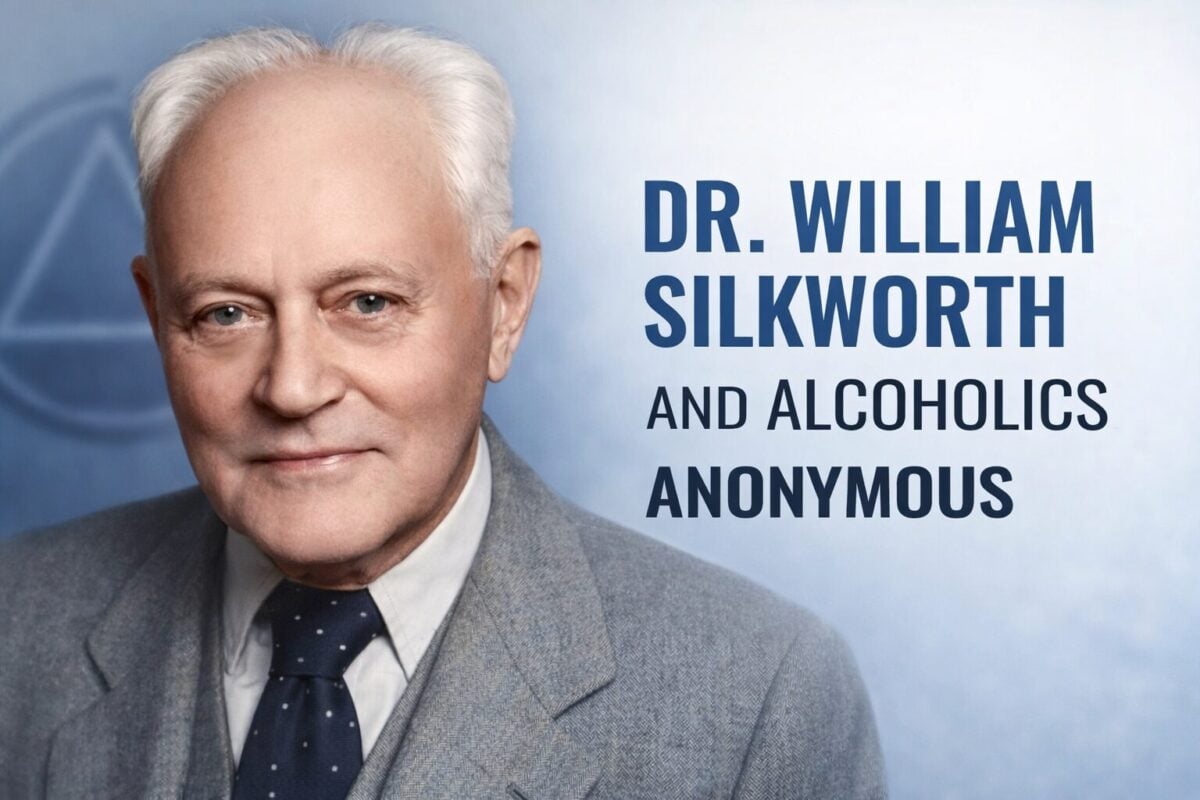
Dr. William Duncan Silkwort,h M.D., stands as one of the most pivotal figures in Alcoholics Anonymous history, though his name appears less frequently than Bill Wilson or Dr. Bob Smith. Working at Charles B. Towns Hospital in the 1930s, Dr. Silkworth treated Bill W. multiple times for chronic alcoholism. His revolutionary medical perspective transformed how society understood addiction.
Dr. Silkworth introduced the disease concept that would become central to AA’s spiritual foundation. He described alcoholism as a dual condition: a mental obsession that compels the alcoholic to take the first drink, and a physical allergy that triggers an uncontrollable reaction once alcohol enters the system. This framework moved alcoholism from a moral failing to a medical condition.
Bill Wilson credited Dr. Silkworth as AA’s “first friend” and one of its true founders. The doctor risked his professional reputation to champion this fledgling organization when few in the medical establishment took alcoholism seriously. His influence appears throughout the Big Book, particularly in “The Doctor’s Opinion,” which he authored for the first edition of Alcoholics Anonymous.
The Doctor’s Opinion: Medical Science Meets Spiritual Awakening
The Doctor’s Opinion” opened the original manuscript of AA with medical credibility that alcoholics desperately needed. Dr. Silkworth explained that the alcoholic suffers from “an obsession of the mind that condemns one to drink and an allergy of the body that condemns one to die.” This framing helped countless sufferers understand they weren’t weak or immoral.
His medical insights directly influenced how Bill Wilson approached helping other alcoholics. Understanding that willpower alone couldn’t overcome the mental obsession, Bill W. recognized that alcoholics needed something beyond themselves. This realization became the catalyst for AA’s emphasis on a Higher Power and the spiritual awakening that defines the program.
The connection between Dr. Silkworth’s medical framework and AA’s spiritual solution wasn’t coincidental. Bill Wilson’s spiritual experience at Towns Hospital, following treatment with the Belladonna Cure, occurred under Dr. Silkworth’s care. The doctor validated this experience rather than dismissing it as a hallucination, encouraging Bill to embrace whatever had freed him from the bondage of self.
Prayers in the Big Book: Spiritual Tools for Mental Health
The Big Book of Alcoholics Anonymous contains several formal prayers, including prayers for each step, that have become central to recovery worldwide. While Dr. Silkworth didn’t write these prayers directly, his medical understanding of alcoholism’s dual nature informed why spiritual solutions proved necessary. His insights about the mental obsession helped Bill Wilson understand why practical steps toward a Higher Power could succeed where medical treatment alone failed.
The Third Step Prayer
The Third Step Prayer appears in Chapter Five: “God, I offer myself to Thee, to build with me and to do with me as Thou wilt. Relieve me of the bondage of self, that I may better do Thy will. Take away my difficulties, that victory over them may bear witness to those I would help of Thy power, Thy love, and Thy way of life. May I do Thy will always!”
This prayer directly addresses the mental obsession Dr. Silkworth identified. By surrendering self-seeking motives and asking to be relieved of the bondage of self, alcoholics acknowledge they cannot manage their lives alone. The prayer requests freedom from a single defect of character: self-centered thinking.
The Seventh Step Prayer
When alcoholics reach Step Seven, they pray: “My Creator, I am now willing that you should have all of me, good and bad. I pray that you now remove from me every single defect of character which stands in the way of my usefulness to you and my fellows. Grant me strength, as I go out from here, to do your bidding. Amen.”
This prayer acknowledges the limitations Dr. Silkworth described. The alcoholic’s mental obsession stems from character defects that require spiritual intervention. The prayer asks that these defects be removed so the individual can serve others to the fullest, recognizing that self-pity and self-seeking motives must be replaced by Thy power working through them.
The Serenity Prayer and Daily Practice
While not written by AA members, the Serenity Prayer became synonymous with the program: “God, grant me the serenity to accept the things I cannot change, courage to change the things I can, and wisdom to know the difference.” This prayer addresses the next step in daily recovery, helping alcoholics maintain mental health by distinguishing between what they can and cannot control.
Thy love, as referenced throughout these prayers, represents the Higher Power’s role in maintaining sobriety. Dr. Silkworth’s understanding that alcoholics needed help beyond themselves gave these prayers medical legitimacy. The spirit of forgiveness requested in prayer work helps overcome resentments that fuel drinking.
Influential Books That Shaped AA’s Spiritual Program
Bill Wilson’s spiritual awakening didn’t occur in isolation. Several influential books shaped his thinking and appear referenced throughout AA history. Understanding these works provides context for how Dr. Silkworth’s medical perspective complemented spiritual literature.
“Varieties of Religious Experiences” by William James profoundly influenced Bill W. This psychology text explored spiritual awakening across religions and cultures. Bill Wilson read it while recovering under Dr. Silkworth’s care at Towns Hospital. The book validated his spiritual experience through academic study of religious transformation.
“The Confessions of Saint Augustine” provided another model of spiritual conversion. Augustine’s journey from dissolution to faith paralleled the alcoholic’s path. Bill Wilson and early AA members studied these confessions as examples of spiritual transformation that could apply to alcoholism.
“As a Man Thinketh” by James Allen emphasized how thoughts create reality. This short book influenced how AA members understood the mental obsession Dr. Silkworth described. Changing thought patterns became crucial to recovery, complementing the physical allergy explanation.
John Barleycorn by Jack London offered an alcoholic’s perspective on drinking’s progression. Though London didn’t achieve lasting sobriety, his autobiographical novel resonated with AA members who recognized their own experiences. The book provided literary validation for the disease concept championed by Dr. Silkworth.
The Emmanuel Movement, documented in various newspaper articles and book reviews, explored spiritual healing for alcoholics before AA existed. This early twentieth-century approach influenced clergy and medical professionals, including those at Towns Hospital, where Dr. Silkworth worked. The movement demonstrated that spiritual methods could address alcoholism’s mental component.
AA’s Global Spiritual Foundation: Resources Across Continents
The spiritual awakening Dr. Silkworth helped validate spread far beyond the United States. Today, AA meetings occur in virtually every country, with prayers and spiritual practices adapted to local cultures while maintaining core principles. The program’s spiritual foundation transcends geography, language, and religious tradition.
North American Recovery Resources
Throughout the United States, from Rhode Island to South Dakota, AA groups practice the prayers Bill Wilson incorporated into the Big Book. North Carolina and South Carolina host thousands of meetings weekly. West Virginia communities maintain a strong AA presence in both rural and urban areas. North Dakota’s sparse population still supports active AA groups practicing these spiritual principles.
In Canada, British Columbia and Nova Scotia pioneered the early expansion of AA. Northwest Territories groups serve remote communities where alcoholism rates remain high. Puerto Rico embraced AA’s spiritual program, translating materials while maintaining prayer traditions. Costa Rica, in Central America, became an early adopter, with meetings now common throughout the region.
Caribbean and Island Nations
The Dominican Republic hosts vibrant AA communities throughout its cities. Saint Kitts, Saint Lucia, Saint Vincent, and Saint Martin each maintain active groups. Saint Helena and Saint Maarten, despite small populations, practice AA principles. American Samoa and Western Samoa both incorporate traditional island culture with AA’s spiritual foundation.
South American and Latin American Expansion
French Guiana serves as a critical AA center in South America. The spiritual awakening message reached indigenous communities and urban centers alike. Throughout South America, the prayers and steps remain consistent with the original AA manuscript, while adapting to local languages and customs.
African and Middle Eastern Recovery
The Central African Republic faces significant challenges but maintains an AA presence. South Georgia supports groups for research station personnel. Equatorial Guinea and surrounding nations are slowly developing AA infrastructure. The Middle East, including Saudi Arabia and the United Arab Emirates, navigates cultural considerations while offering recovery resources. Sri Lanka, in South Asia, has established strong AA communities.
Asian and Pacific Recovery Networks
South Korea and North Korea present contrasting recovery landscapes. Hong Kong maintains robust English and Cantonese-speaking groups. The Solomon Islands, the Marshall Islands, the Pitcairn Islands, and the Northern Mariana Islands host small but committed fellowships. Papua New Guinea faces unique challenges due to its diverse languages and remote communities. French Polynesia, the Comoros, and the Seychelles demonstrate AA’s reach among isolated populations. The Czech Republic in Eastern Europe has developed a comprehensive recovery infrastructure.
Falkland Islands residents access AA through distance communication, demonstrating the program’s adaptability. These global communities all practice variations of the prayers Bill Wilson wrote under the influence of Dr. Silkworth’s medical insights.
Free Resources for Understanding AA History and Spiritual Practice
Modern technology provides unprecedented access to AA’s history and spiritual practices. These free resources help newcomers understand Dr. Silkworth’s role and the prayers that define recovery.
Digital Access and Free Apps
Free AA apps provide convenient access to the Big Book, prayers, and meeting information. Free AA Apple apps offer features such as daily reflections, prayer reminders, and sobriety counters. The Step Toolkit app guides users through working the Twelve Steps with prayer prompts and reflection questions. These free apps make recovery resources available to anyone with a smartphone.
Free audiobooks of the Big Book, including the Big Book Stories Edition, allow listeners to hear recovery stories while commuting or exercising. AA Speaker Sandy B. and other influential speakers share experience, strength, and hope through recordings available at no cost. These free resources help those who struggle with reading or prefer audio learning.
Historical Documents and Research
The original manuscript of AA provides insights into Bill Wilson’s thought process and Dr. Silkworth’s influence. The first AA pamphlet outlined basic principles that remain unchanged. The writings of AA members from the 1930s and 1940s demonstrate how the spiritual foundation evolved.
The manuscript of AA World History documents the program’s expansion from its roots in the United States to an international presence. Timelines of historic AA events track key moments, including Dr. Silkworth’s death in 1951 and the subsequent growth of AA. The PDF project makes historical documents accessible to researchers studying AA’s development.
Additional AA Grapevine articles explore AA’s history with depth and nuance. These publications include interviews with early members who knew Dr. Silkorth personally. Book reviews analyze influential books that shaped Bill Wilson’s thinking. An international journal publishes scholarly research on the effectiveness and spiritual dimensions of AA.
External links from official AA websites direct users to verified resources; newspaper articles from the 1930s through the 1950s chronicle AA’s early growth and public perception. Clergy and AA materials help religious leaders understand how to support AA members without conflicts.
Living in the Mainstream of Life: Prayer in Action
Dr. Silkworth understood that successful recovery meant returning to the mainstream of life, not isolation from society. The prayers in the Big Book support this reintegration by addressing personal relationships, mental health, and practical living. Thy way of life, as articulated in the Third Step Prayer, means participating fully in family, work, and community.
My usefulness emerges through following the steps and applying prayer to daily situations. Rather than seeking eternal life in a theological sense, AA focuses on the most remarkable thing: living sober today. Doing the right thing moment by moment replaces the drinking life’s chaos with purpose and dignity.
When alcoholics pray to be relieved of self-seeking motives, they prepare for healthy personal relationships. Self-pity dissolves through gratitude practices and service work. The Big Book story authors demonstrate how prayer transformed their lives from hopeless alcoholism to productive citizenship.
Conclusion: Dr. Silkworth’s Enduring Legacy
Dr. William Duncan Silkworth, M.D., never wrote prayers or claimed spiritual authority. Yet his medical understanding of alcoholism’s nature made AA’s spiritual program possible. By explaining the mental obsession and physical allergy, he showed why willpower alone couldn’t produce sobriety. His validation of Bill W.’s spiritual experience encouraged the incorporation of reliance on a Higher Power into recovery.
The prayers in the Big Book address the mental obsession Dr. Silkworth identified. They ask for freedom from the bondage of self, removal of defects of character, and strength to do Thy will. These spiritual tools complement the medical reality that alcoholics cannot safely drink. Together, science and spirituality offer hope where either alone might fail.
Today, millions worldwide practice these prayers across every continent and culture. From the United States to the Solomon Islands, from Costa Rica to Hong Kong, alcoholics seek Thy power to maintain sobriety. Dr. Silkworth’s legacy lives in every person who finds freedom through AA’s combination of medical truth and spiritual awakening. His insights remain as relevant now as when he first treated Bill Wilson at Towns Hospital nearly a century ago.